
Whether it’s renewable energy, healthcare, construction or advanced manufacturing, new skills will be in demand.
If you’ve got workplace experience already, Recognition of Prior Learning (RPL) provides a fast-track way to re-position yourself for these future roles—without starting from scratch.
Future industries: Construction, renewable energy, healthcare, and advanced manufacturing
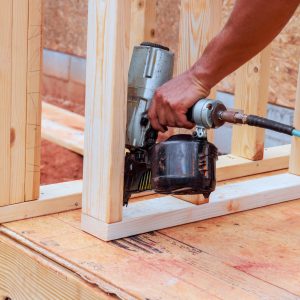
Construction & infrastructure
Large-scale projects, urban renewal, and regional development mean construction remains a powerhouse. According to the Australian Bureau of Statistics and job-outlook data, employment in construction will see sustained growth through the next decade. Skilled tradespeople—electricians, plumbers, builders—will stay in high demand. Key insight: For anyone with construction experience, an RPL qualification can translate into credentials that unlock higher-growth roles and licensing.Renewable energy & clean technologies
Australia’s transition to renewables is ramping up. Jobs in solar installation, battery systems, wind infrastructure and grid support are projected to expand quickly. The Department of Employment and Workplace Relations lists clean-energy trades and technicians as among the fastest-growing occupations. If you already work in mechanics, electrical, fabrication or construction, converting your on-the-job skills via RPL gives you a direct entry into the booming renewables sector.Healthcare & aged-care services
An ageing population and increasing demand for medical services mean healthcare jobs are set to grow strongly. Roles like allied health assistants, dental technicians, clinical equipment technicians, and facility maintenance are all rising. For those with hands-on skills in allied trades or facility services, RPL offers the opportunity to formally qualify and move into more stable, future-proof careers.Advanced manufacturing & automation
Digital manufacturing, robotics, custom fabrication and advanced materials are transforming manufacturing into a high-skill industry. The jobs of 2030 will look different—greater automation, stronger technical mastery, less routine work. Skilled workers who already understand machines, automation or fabrication can use RPL to obtain a nationally recognised qualification and transition into next-gen manufacturing roles.Why RPL matters: How it shortens the path into new fields
Many people assume retraining for future-proof jobs means years of study—and that’s a barrier. But with career change RPL, that’s often not true. RPL recognises the skills and knowledge you already have and maps that to accredited qualifications. Here’s how RPL can accelerate your transition:- Faster entry into a growth industry: Instead of 1–3 years study, RPL may take weeks/months depending on evidence.
- Lower cost than full course: You only “fill gaps” rather than relearn everything.
- Bridges to licencing and better pay: A formal credential means you can apply for licences or jobs in sectors that previously required formal qualifications.
- Match experience to demand: If you’ve worked in a related trade, service role or mechanical field—RPL lets you pivot into healthcare, renewables, advanced manufacturing or construction without starting at zero.
Case study: Career switch example
Marco had been working as a leading hand carpenter and informal site supervisor on residential builds across regional NSW for over eight years, but he didn’t hold a formal Australian qualification. When tenders started requiring a licensed builder or qualified site supervisor, he realised he needed to get certified to keep progressing. Through Skills Certified, Marco used his on-the-tools experience, site coordination work, and years of managing subcontractors to complete RPL for a Certificate IV in Building and Construction (CPC40120). With help gathering evidence from past projects, he was able to turn his existing skills into a nationally recognised qualification. Within four months, Marco moved into a formal site supervisor role on medium-density projects. His income increased by 25%, and he now has the qualification he needs to take on larger projects and work towards his builder’s licence, instead of being limited to unqualified roles on site. This is a perfect example of how skill shortage Australia meets experience through RPL and opens high-growth pathways.Action step: How to identify if your experience matches growth roles
- List your current skills & experience: maintenance, electrical, plumbing, fabrication, mechanical service.
- Match to growth industries: solar, battery tech, advanced manufacturing, healthcare tech, or infrastructure.
- Check licensing & qualification requirements in your target industry.
- Contact Skills Certified for a free RPL assessment: we’ll review your evidence and recommend the quickest pathway to a recognised qualification.
- Set your goal: decide your target industry and role, then use your new qualification to apply for roles or licencing.