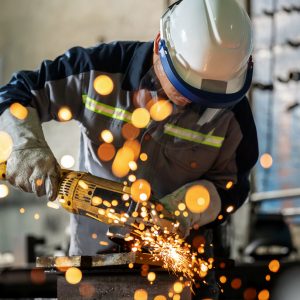

If you could do the work, solve problems on-site, and earn the respect of the people around you, that counted for something.
In many industries, it still does.
But the workforce has changed. Employers want formal qualifications. Licensing requirements have tightened. Compliance matters more. Tender applications ask for proof. Promotions often depend as much on paperwork as on practical ability.
And that’s where thousands of experienced Australians have found themselves stuck.
They’ve done the hours. Learned on the tools. Managed teams. Solved problems under pressure. But on paper? Nothing to show for it.
For the past 10 years, Skills Certified Australia has helped bridge that gap — helping experienced workers gain nationally recognised qualifications through Recognition of Prior Learning (RPL).
Not by making people start again.
By recognising what they already know.
Experience should count for something
There’s a particular kind of frustration that comes from being capable but unqualified.
You can install the system. Run the site. Train the apprentice. Keep the project moving when things go sideways. Yet someone with less experience — but the right certificate — gets the opportunity.
It happens across Australia every day.
Tradespeople who’ve spent years on construction sites. Workers who learned through hands-on experience instead of in classrooms. Migrants with overseas qualifications that aren’t formally recognised here. Supervisors who’ve quietly stepped into leadership roles without ever updating their paperwork.
The reality is that many skilled Australians are already performing at the level of a qualification long before they officially hold one.
Recognition of Prior Learning exists to acknowledge that.
According to the Australian Qualifications Framework, RPL is a formal assessment process that evaluates skills and knowledge gained through work experience, previous training, and life experience against nationally recognised competency standards.
In simple terms?
It’s a way to turn real-world experience into a recognised qualification.
And over the past decade, that pathway has become increasingly important.
Why formal qualifications matter more than ever
Australia is facing ongoing skills shortages across construction, engineering, mining, community services, logistics, manufacturing, and trades.
At the same time, industries are becoming more regulated and compliance-focused.
That means qualifications are no longer just “nice to have” in many roles. They’ve become essential for:
- Licensing and registration
- Tender eligibility
- Promotions and leadership roles
- Insurance and compliance requirements
- Contracting opportunities
- Business ownership pathways.
A worker may already have the practical skills required to do the job safely and effectively. But without formal recognition, career progression can stall.
That’s one of the reasons RPL pathways continue to grow across Australia.
For experienced workers, RPL offers a smarter alternative to starting from scratch through traditional full-time study or apprenticeships.
Instead of repeating training they’ve already learned on-site, workers can have their existing competency assessed through evidence and practical experience.
No wasted years. No unnecessary repetition. No sitting through units covering work they already do every day.
10 years supporting Australian workers
A lot can happen in 10 years.
An apprentice can become a business owner.
A labourer can become a supervisor.
A small local company can grow into a national operation.
Over the last decade, Skills Certified Australia has worked with thousands of Australians across a huge range of industries — helping them gain nationally recognised qualifications through partnered Registered Training Organisations (RTOs).
From construction and plumbing to engineering, community services, hospitality, business, and mining, the common thread has always been the same:
Experienced people deserve recognition for the skills they already have.
That longevity matters.
The RPL industry can be confusing for workers trying to understand eligibility, evidence requirements, licensing rules, or qualification pathways. Many people don’t know where to start — or whether their experience is “enough”.
After 10 years in the industry, Skills Certified understands the realities of Australian workplaces and how experience actually develops in the real world.
Not everyone follows a neat training pathway. Careers are messy. People learn through overtime shifts, site work, practical problem-solving, mentoring, mistakes, and years of repetition.
The goal of RPL isn’t to shortcut standards.
It’s to recognise competency that already exists.
How Recognition of Prior Learning works
For many people, RPL sounds more complicated than it actually is.
At its core, Recognition of Prior Learning is simply an assessment process.
A worker provides evidence of their experience, skills, and prior training. That evidence is then assessed against nationally recognised competency standards through a partnered RTO.
Evidence can include things like:
- Resumes and work history
- Photos or videos of completed work
- References from employers or supervisors
- Licences or tickets
- Job sheets or project documentation
- Overseas qualifications
- Workplace reports or procedures
- Examples of practical work completed.
If competency is demonstrated, the worker may receive a nationally recognised qualification equivalent to completing the course through traditional study.
In some cases, additional evidence or gap training may be required. But for many experienced workers, the process is far faster and more practical than returning to full-time study.
That’s particularly valuable for people already working full-time, supporting families, running businesses, or managing teams.
Because most experienced workers don’t want to “go back to school”.
They just want recognition for what they already know.
Why Australians choose Skills Certified
Trust matters in the RPL industry.
People aren’t just investing money into a qualification pathway — they’re investing time, career goals, and future opportunities.
Over the past decade, Skills Certified has built its reputation around helping workers navigate the process clearly and realistically.
That includes:
- Guidance through the RPL process
For many workers, understanding evidence requirements or qualification pathways is the hardest part. Skills Certified helps simplify the process from the initial skills check through to assessment.
- Nationally recognised qualifications
Qualifications are issued through partnered Registered Training Organisations (RTOs) and align with nationally recognised training standards.
- Australia-wide support
Workers from trades, construction, engineering, business, hospitality, community services, and technical industries across Australia have used Skills Certified to explore RPL pathways.
- A practical, worker-focused approach
The process is designed around experienced workers — people already balancing jobs, shifts, businesses, and responsibilities.
No unnecessary jargon. No inflated promises. Just practical guidance.
Real experience. Recognised.
One of the biggest misconceptions about RPL is that it’s about “getting something easy”.
It’s not.
RPL still requires evidence. Competency still needs to be demonstrated. Standards still need to be met.
What it avoids is unnecessary repetition.
If someone has already spent years performing skilled work safely and competently, Recognition of Prior Learning provides a pathway to formally acknowledge that experience.
That recognition can open doors.
- Higher-paying work.
- Licensing opportunities.
- Promotions.
- Business ownership.
- Greater confidence.
- New career pathways.
Sometimes the qualification itself matters.
Sometimes it’s what the qualification allows someone to finally do.
The next 10 years start somewhere
Ten years ago, Skills Certified started with one simple idea: Experience should count.
That belief still sits at the centre of the business today.
Because behind every qualification is usually someone who has already put in the work — often for years.
The paperwork just hasn’t caught up yet.
Take the next step
If you’ve been working in your industry for years but never formalised your experience, a free skills check can help you understand what qualification pathways may already be available to you.
Take the Free 60 Second Skills Check and find out if your experience could qualify you for a nationally recognised qualification.