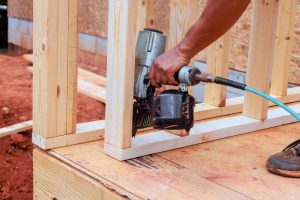


Going out on your own as a tradie: Are you actually ready?
There comes a point in plenty of trade careers where the thought creeps in: maybe it’s time to stop building someone else’s business and start backing your own.

There comes a point in plenty of trade careers where the thought creeps in: maybe it’s time to stop building someone else’s business and start backing your own.

Some months in the trades feel flush. Quotes are landing, invoices are paid, and the account balance looks almost suspiciously healthy.

If you’ve ever finished a day on site feeling like your brain is still wearing steel caps, you’re in the right place.

You’re on site at sparrows. The foreman’s off in a meeting. The apprentices are looking at you like you’re the adult in the room (rude). A delivery’s late, a subcontractor’s cranky, the client’s hovering, and somehow you’re the one making it all run.

If you’ve been working in your trade for years, you already know the frustrating part isn’t the work. It’s the paperwork. And when you’re going for RPL certification, paperwork is the whole game.

If you’ve ever taken an interstate job and thought, “Surely a licence is a licence,” you’re not alone. The confusion usually hits right when you can least afford it – you’ve lined up the work, booked accommodation, maybe even dragged the family across a border… and then someone asks whether you’re actually allowed to sign off the job in that state.

Fast-track your trade licence through RPL. Learn how experience is assessed in 2026, what evidence you need, and how to start with a free skills check.

He’d been working in construction for more than two decades. He ran jobs when the boss wasn’t around. He trained apprentices. He handled site issues, safety checks, and client questions without blinking.

Ever had someone watch you work and say, “Mate… you should be teaching this”?

Australia’s trades sector is heading into one of the biggest skills shortages in recent history. Construction, infrastructure, housing, renewable energy, and transport are all expanding at once — and every one of these industries is struggling to find qualified, licensed tradies.

Many skilled workers carry years of experience, but without a formal qualification, they may be locked out of higher-paying roles, tenders or contract rates.

Australia’s job market is shifting. By 2030, many industries won’t just grow—they’ll transform. Whether it’s renewable energy, healthcare, construction or advanced manufacturing, new skills will be in demand.

There comes a point in plenty of trade careers where the thought creeps in: maybe it’s time to stop building someone else’s business and start backing your own.

Some months in the trades feel flush. Quotes are landing, invoices are paid, and the account balance looks almost suspiciously healthy.
Error: Contact form not found.